Checking on the Seedlings while Sealed
For the first month and a half, you will want to keep the seedlings sealed tight. Opening will let moisture out and potential contamination in. But checking on them without opening through the clear sealed plastic daily to every couple days will help ensure nothing is going wrong in their little sealed container. Keep an eye out for the following:
Moisture levels
There should always be condensation droplets on the walls and plastic wrap. If there isn't, you need to open and add some moisture by misting.
Germination
You should see them emerge between days 4 and 14. They will have the seed casings stuck to their little tops at first - again, normal and healthy. Don’t sacrifice the sealed sterile environment to brush the seed casings off.
Algae, fungus, mold, moss, mildew
While it's extremely unlikely any of these will grow on vermiculite especially if you sterilized the container and seed casing, a couple examples have been found. Most of the time, these growths are entirely harmless anyway. “What are those little white fuzzballs on my seed that appeared a week after sowing the seeds?” Those are the roots emerging from the seed casing, not mold! Normal and healthy - don't open them because of this. They may be upside down or on their side now, but those tiny roots will grab the substrate and pull themselves right side up in no time all on their own.
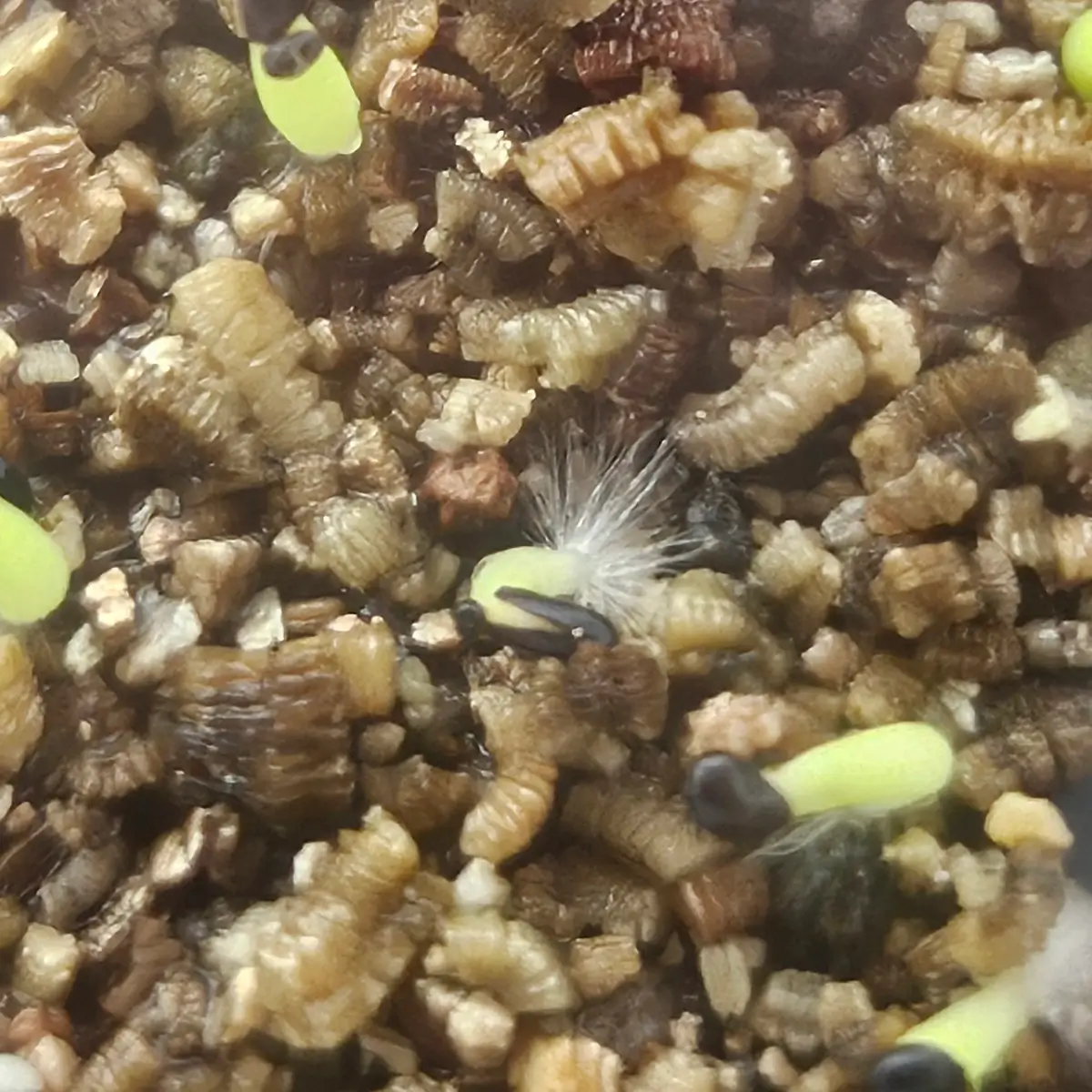 Emerging seedling roots - This is not mold!
The type of growth to watch out for is orange or red. If you see this, take a photo and ask the community or just go ahead and open it and mist with hydrogen peroxide a few times per day for a few days until it dies off.
Light stress
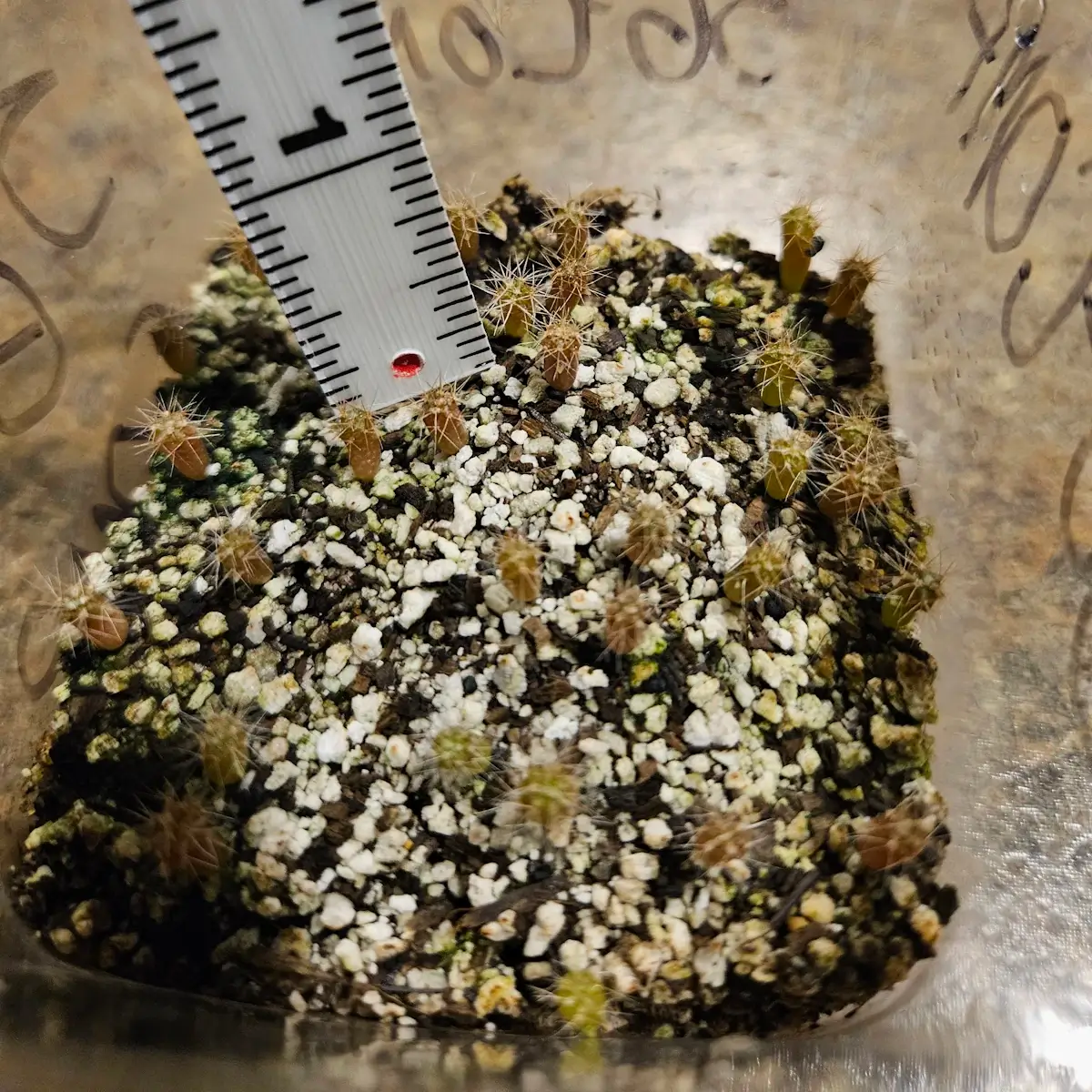 Light stressed seedlings
Once they emerge, your main concern is going to be light stress. If the light is currently too strong for them, they will show you by turning shades of pink and red. You can dial the light amount back by 10 to 15%, or cover with a paper towel or piece of white paper, and wait until they turn green again. Once a seedling has turned red it will stop growing until it recovers, which can take a while if it was severely stressed or just a day if it was very minor. With experience you can learn to recognize the early yellowing stages of light stress and correct before they slow down. They can also turn red at this stage if they get too cold at night, so don't let that happen so you won’t mix those up!
White albinos
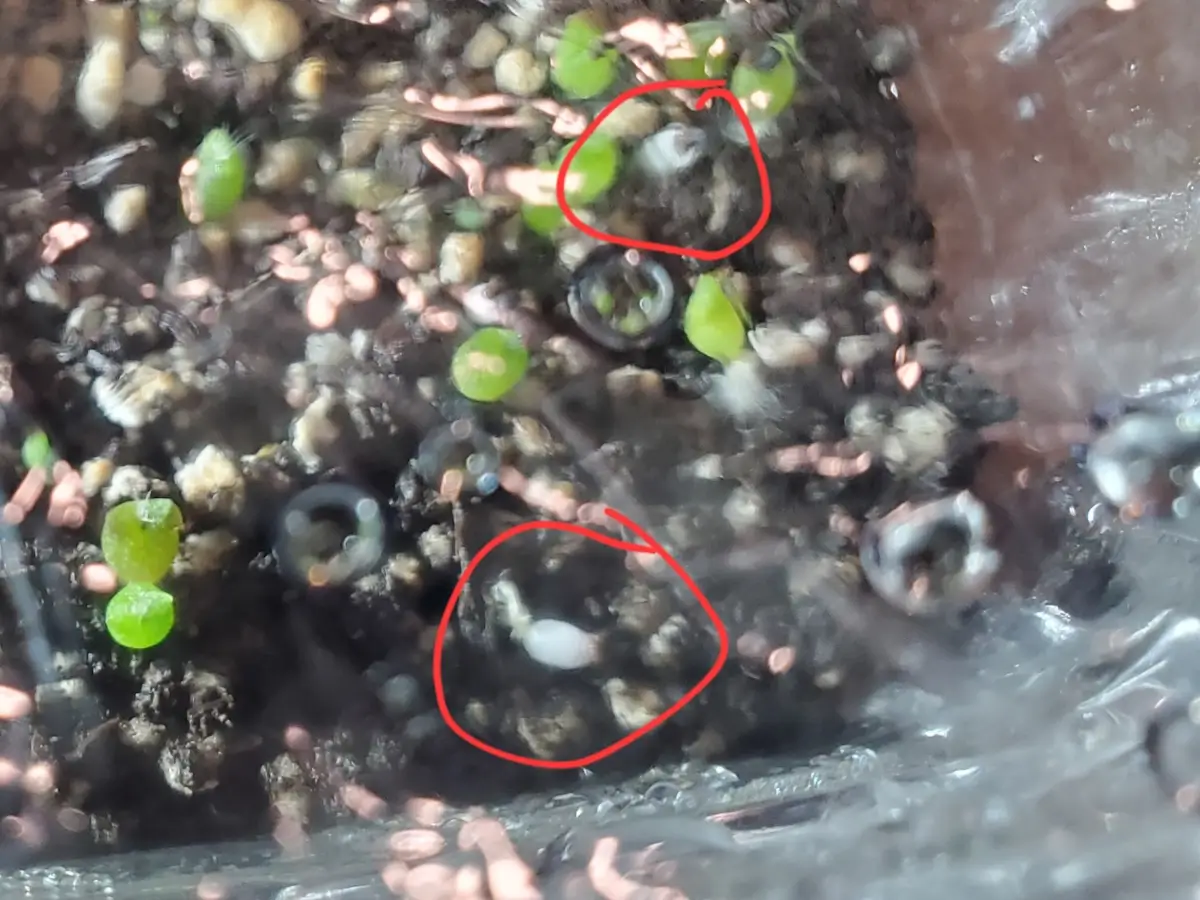 Albino seedlings
Sometimes, seedlings will be pure white with no chlorophyll and small. If they come straight out of the seed this way, typically it is because it was an albino. You may see more of these in certain crosses due to weaker genetics or zero in other crosses with stronger genetics. Since they don't have any chlorophyll they will die rather quickly, about a week or two in most cases. Some people have attempted to save them with low success rates via micrografting, but personally I don't see much value in saving a plant that can't survive on its own and at best will be an unhealthy graft for the rest of its existence. In some situations where the container gets too hot such as if it received direct sun, they can go from green to this same ghostly white color which essentially means they are cooked and already dead.
After a couple months, once the seedlings have at least three rows of spines, its time to start thinking about acclimatization.